Trump”s candid admission that Witkoff wanted to sell Ukraine to Russia sounds incredibly cynical and bizarre from the perspective of public policy and international law.
It turns out that US President Donald Trump does not distinguish between the public and private spheres, which in the near future could have tragic consequences, not only for the USA but for the entire Western world.
Until now, America has been the leader of the free world and the guarantor of European security, but it seems that this era is coming to an end and now each nation must independently ensure the protection of its independence and state sovereignty.
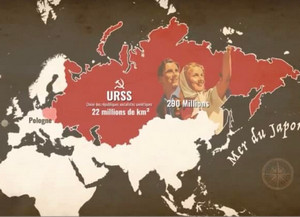
After the RF’s full-scale invasion of Ukraine, a real danger looms over the whole of Europe. Putin is trying to take full advantage of the USA’s de facto abandonment of global political leadership, which happened during Biden’s time, and is now using all of Trump’s weaknesses to achieve his main goal: restoring Russia’s influence, which it had during the Soviet era.
Some analysts argue that Trump is playing into Putin’s hands because he is a Russian agent who was recruited by the KGB back in the days of the USSR. In the public sphere, he has even been given the operational code name “Agent Krasnov”. But this is an overly simplistic view of the problem.
Even if Trump were a Russian agent, he would not be able to radically change US policy on his own, since America is not a totalitarian state, unlike Russia, China, or North Korea. It is obvious that his actions have the support of influential financial and political circles in the United States. Otherwise, he would no longer be the US President. The history of that country has many examples of Presidents being removed from office prematurely, and not only through impeachment. Therefore, even if Putin has some compromising information on Trump, its disclosure cannot significantly influence the USA’s policy, but will only lead to Trump’s resignation and the election of another person to replace him. Therefore, blackmail with compromising information can only influence Trump in some way, not the policy of the United States as a whole. When it comes to a sharp change in US policy towards its allies, including Ukraine, the problem is much more serious and profound.
During Biden’s presidency, the USA allowed Putin to attack Ukraine. Russia failed to conquer “Kyiv in three days” and got bogged down in a bloody war.
In the nearly four years of this war, the balance of political power in the world has changed. America has lost its role as a global leader. The United Kingdom, Germany, and France have begun to work seriously on creating a new European security system independent of the USA. Ukraine, Romania, and Moldova have created the “Odesa Triangle”, which could eventually become an influential security alliance of Central and Southeastern European states. The Scandinavian countries also feel a real threat from Russia and, together with the Baltic states, have already begun working on the creation of a Northern Alliance to protect themselves from the RF’s aggressive foreign policy.
In conclusion, it can be said that after Russia’s full-scale invasion of Ukraine, the world has changed and will never return to its previous state. The UN has finally lost its influence and authority, and the old system of international security and law has been destroyed. For the fourth year in a row, a difficult and bloody Russian-Ukrainian war has been raging in the heart of Europe, and no one knows how to stop it. It seems that after Russia’s invasion of Ukraine, EU leaders have begun to take all the challenges and threats coming from Russia seriously. This has forced them to take a more pragmatic approach to addressing their own defence against external aggression and to begin actively working on creating a European security system independent of the USA, as well as addressing other issues that may arise in the near future for the EU and our entire changing and unstable modern world.
Oleh Bereziuk,
Institute for Global Politics